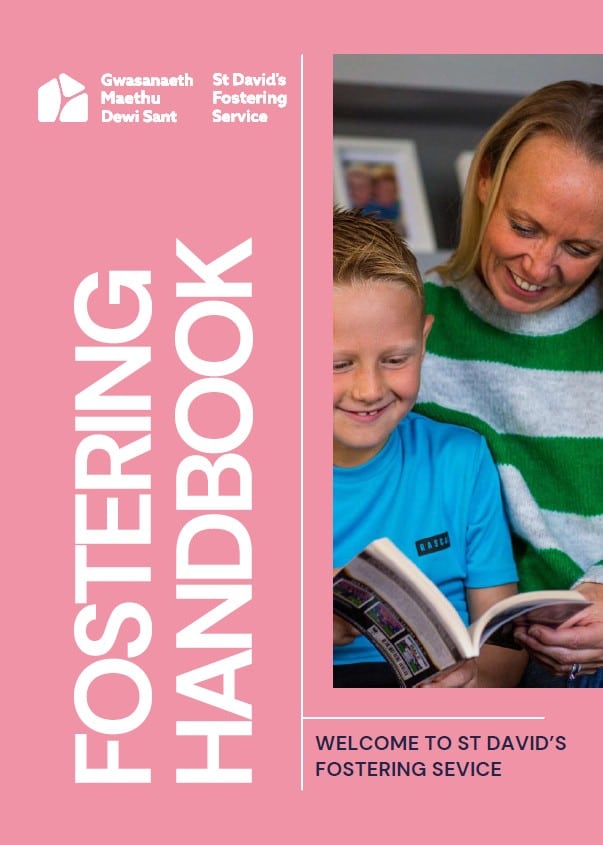
Foster Carer Handbook
Supporting Foster Carers to Provide Safe, Nurturing and Effective Care
A fostering handbook is an essential resource for foster carers. It provides practical guidance, policies, procedures, and best-practice advice to help carers provide safe, stable, and supportive homes for children and young people in care.
The handbook acts as a day-to-day reference tool, helping foster carers understand their responsibilities, safeguarding requirements, support available, and the standards expected when caring for children.
The St David’s Fostering Service Foster Carer Handbook can be found here:
What the Handbook Covers
Caring for Children and Young People
Foster carers play a vital role in helping children feel safe, valued, and supported. The handbook provides guidance on:
- Building positive relationships
- Promoting emotional wellbeing
- Supporting healthy development
- Managing behaviour positively
- Encouraging independence
- Supporting identity, culture and diversity
Safe Caring and Safeguarding
Children in care may have experienced trauma, loss, neglect or abuse. Safe caring practices help protect both children and foster carers.
Key areas include:
- Showing affection appropriately
- Physical contact and boundaries
- Safe play and supervision
- Bullying prevention
- Intimate care arrangements
- Bedroom and privacy expectations
- Online safety and internet use
- Managing risks and safer caring plans
- Missing-from-home procedures
- Safe storage of medication
The handbook emphasises that affection, warmth and positive relationships are essential while ensuring clear boundaries and safeguarding measures are maintained.
Relationships, Sex and Sexual Health Education
Foster carers have an important role in helping children and young people understand:
- Healthy relationships
- Consent
- Personal boundaries
- Sexual health
- Online relationships
- Respect and equality
The handbook encourages age-appropriate conversations throughout childhood and adolescence to help young people make informed and safe choices.
Daily Living and Household Guidance
Practical guidance is provided on:
Mealtimes
Foster carers are encouraged to:
- Promote healthy eating
- Respect cultural and dietary needs
- Create positive family mealtimes
- Encourage participation in meal preparation
- Support healthy hydration and nutrition
Bedtime Routines
Children thrive when they have predictable routines. Guidance includes:
- Consistent bedtimes
- Creating a calm sleep environment
- Supporting children who experience sleep difficulties
- Understanding how trauma may affect sleep patterns
Play and Development
Play is recognised as a critical part of child development, supporting:
- Communication skills
- Creativity
- Emotional wellbeing
- Relationship building
- Learning and social development
Supervision and Support
Foster carers are not expected to work alone.
The handbook explains the support available through:
- Supervising Social Workers
- Monthly supervision meetings
- Training and development opportunities
- Foster carer support groups
- Out-of-hours support
- Therapeutic and specialist services
Regular supervision helps monitor children’s progress and provides opportunities to discuss challenges, training needs, health and safety, and placement outcomes.
Allegations, Concerns and Child Protection
The handbook outlines procedures for responding to:
- Safeguarding concerns
- Allegations against foster carers
- Child protection investigations
- Complaints processes
Foster carers and family members are encouraged to understand reporting procedures and know who to contact if concerns arise.
Foster Carer Wellbeing and Self-Care
Looking after children who have experienced trauma can be emotionally demanding.
The handbook encourages carers to:
- Recognise stress early
- Seek support when needed
- Use supervision effectively
- Build strong support networks
- Access training and therapeutic support
Topics such as compassion fatigue, burnout and secondary trauma are explored, highlighting the importance of maintaining personal wellbeing in order to provide effective care.
Finance and Allowances
The handbook explains:
- Foster care allowances
- Financial responsibilities
- Tax and National Insurance requirements
- Children’s savings arrangements
- Record keeping
- Insurance considerations
It also provides guidance on budgeting for children’s needs, activities, clothing, education and leisure opportunities.
Working in Partnership
Effective fostering relies on collaboration with:
- Social workers
- Schools and education providers
- Healthcare professionals
- Birth families
- Independent advocates
- Fostering agency staff
The handbook promotes a team approach that keeps the child’s welfare and development at the centre of decision-making.
Why a Foster Carer Handbook Matters
A fostering handbook provides carers with the knowledge, confidence and support needed to deliver high-quality care. It helps ensure that children and young people experience safe, stable and nurturing homes where they can thrive, develop positive relationships and achieve their full potential.
By combining practical guidance, safeguarding procedures, support resources and professional expectations, the handbook serves as an essential tool throughout a foster carer’s fostering journey.
Further Information
If you are a foster carer and have questions about any aspect of your role, speak with your Supervising Social Worker.